How to Build an Accord: The Small Pairings That Make a Perfume Feel Whole
An accord is two or three notes that stop sounding like themselves and start sounding like one new thing. A guide to building your first accords at home — and the classic Indian pairings to start from.
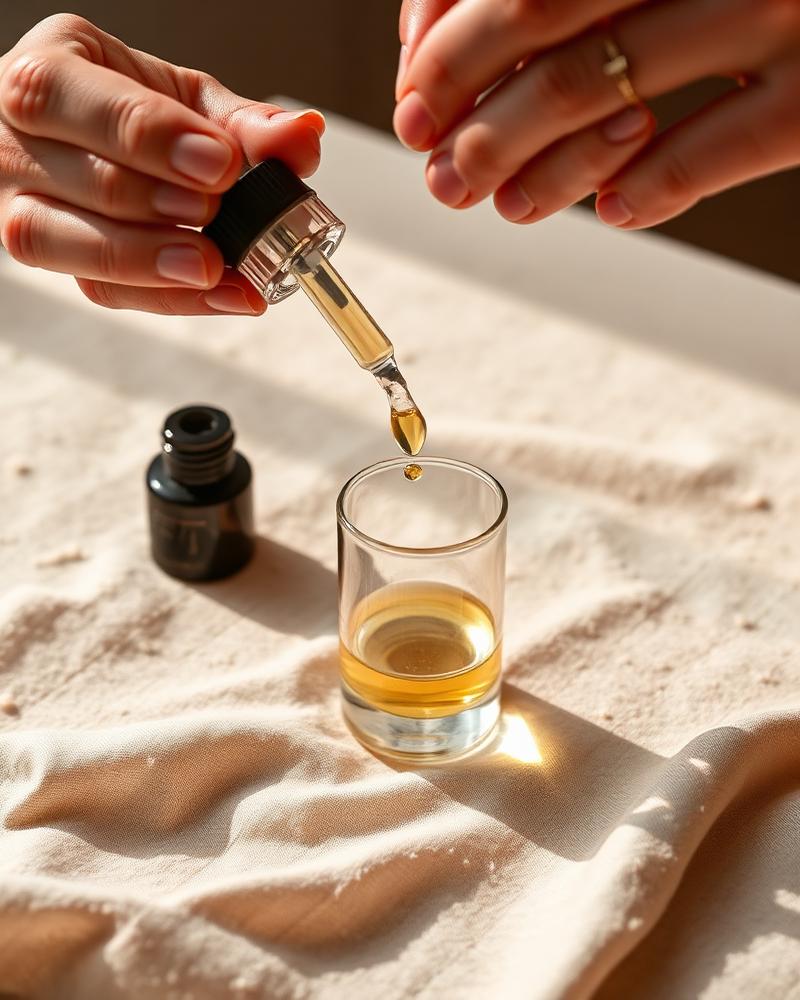
The first time someone said the word 'accord' to me in a perfumery class in Grasse, I nodded the way you nod when a doctor uses a long Latin word and you do not want to look stupid. It took me an embarrassing number of weeks to realise it is one of the simplest, most useful ideas in the craft.
An accord is what happens when you put two or three oils together and they stop reading as individual notes. They braid into one new thing your nose can no longer un-braid. Rose and oud is the most famous example — together they are not 'rose plus oud', they are a third smell that has its own name in every Middle Eastern souk.
Most commercial perfumes you love are built on three or four core accords, dressed up with a top note or two for theatre. Once you start hearing the accords instead of the marketing copy, the whole shelf at any beauty hall suddenly makes a different kind of sense.
The easiest way to feel this at home is the two-drop test. Put one drop of oil A and one drop of oil B on a blotter, hold it close, and breathe out slowly through your nose before you breathe in. If you can still cleanly identify both, it is a mixture. If a third smell shows up that is neither, you have an accord.
A few pairings that almost always reward beginners. Sandalwood and cardamom — warm, milky, a little sweet, the smell of South Indian kitchens at dusk. Rose and saffron — a Mughal classic, slightly leathery, surprisingly modern. Vetiver and bergamot — clean, green, very 90s minimalism. Jasmine and sandalwood — the Indian wedding accord, the one your mother probably wears without knowing.
Building your own from a DIY perfume kit is mostly about restraint. Three oils, max, for your first accords. The temptation when you have eight pretty bottles in front of you is to use all eight. Resist it. Some of the best blends I have smelled from Whiff & When customers were two-note accords with one floral lift on top, and nothing else.
There is a small ratio trick worth knowing. Base notes are dense and slow. If you do a 1:1:1 ratio across top, heart and base, the base will eat the other two within an hour. A starting accord that holds its shape better is usually 3:2:1 — three parts top, two parts heart, one part base. Then taste it on skin and adjust by half-drops.
The Signature Kit is set up specifically for accord-led blending — fewer oils, more refined ones, each one chosen because it pairs cleanly with at least two others in the box. It is the kit I recommend to people who already know what they like and want to stop guessing.
An accord is, in the end, a tiny act of editing. You are deciding which notes get to speak together and which ones get cut from the scene. The first time you build one that actually works, you will smell it on your wrist three hours later and feel quietly stupid that you did not start blending sooner.
"An accord is the moment two oils stop arguing and start finishing each other's sentences."
Alchemist Kit ₹2,499
Studio 6 Reserve palette — Sandalwood, Saffron, Orris Root, Woody Amber, Tonka Bean, Leather.
Every kit includes complimentary access to the AI Perfume Studio — personalised recommendations, step-by-step mixing guidance, and a place to save and refine your blends.
How to do it, step by step
- Pick two oils to testChoose oils from adjacent scent families — e.g. sandalwood + cardamom, or rose + saffron. Wildly different families are advanced; start adjacent.
- Run the two-drop testPut one drop of each on a single blotter. Breathe out slowly through your nose, then breathe in. If a third smell appears that is not either oil, you have an accord.
- Find your ratioMost working accords are not 1:1. Start at 3:2:1 (top:heart:base) and adjust by half-drops on a fresh blotter until the third smell is balanced.
- Test on skinMove the accord from blotter to wrist. Wait two hours without rubbing. Skin chemistry rewrites the blend slightly — the wrist version is the real one.
- Lock the recipeWrite the exact ratio in your notebook, name the accord, and use it as a building block in larger blends instead of starting from scratch every time.
Editorial Lead, Whiff & When
Aanya writes about Indian perfumery, scent memory and the slow craft of building a signature fragrance. She has been blending at home for over a decade and leads editorial at Whiff & When.
Stories like this, once a month
Quiet musings on scent, memory and the rituals of personal blending.
Continue Reading

The Quiet Math of Dilution: Getting Your Perfume Ratios Right at Home
Most home blends fail not because of the oils, but because of the dilution. A working guide to perfume concentration, carrier ratios and the small numbers that decide whether your scent sings or shouts.
Learning to Smell: Building a Vocabulary Before You Build a Perfume
Most of us do not have words for what we smell. A practical guide to building a small, honest scent vocabulary — and why it makes your home blends sharper, faster.
Anatomy of a Perfume Note: Top, Heart and Base, Explained
A working guide to the three-act structure of every fragrance — and how to use top, heart and base notes when you blend your own perfume with a DIY kit.
Build a Perfume Together
Date night, gifting, or a quiet evening alone — every Whiff & When kit is an invitation to make something only you could make.
Shop the Kits