Learning to Smell: Building a Vocabulary Before You Build a Perfume
Most of us do not have words for what we smell. A practical guide to building a small, honest scent vocabulary — and why it makes your home blends sharper, faster.
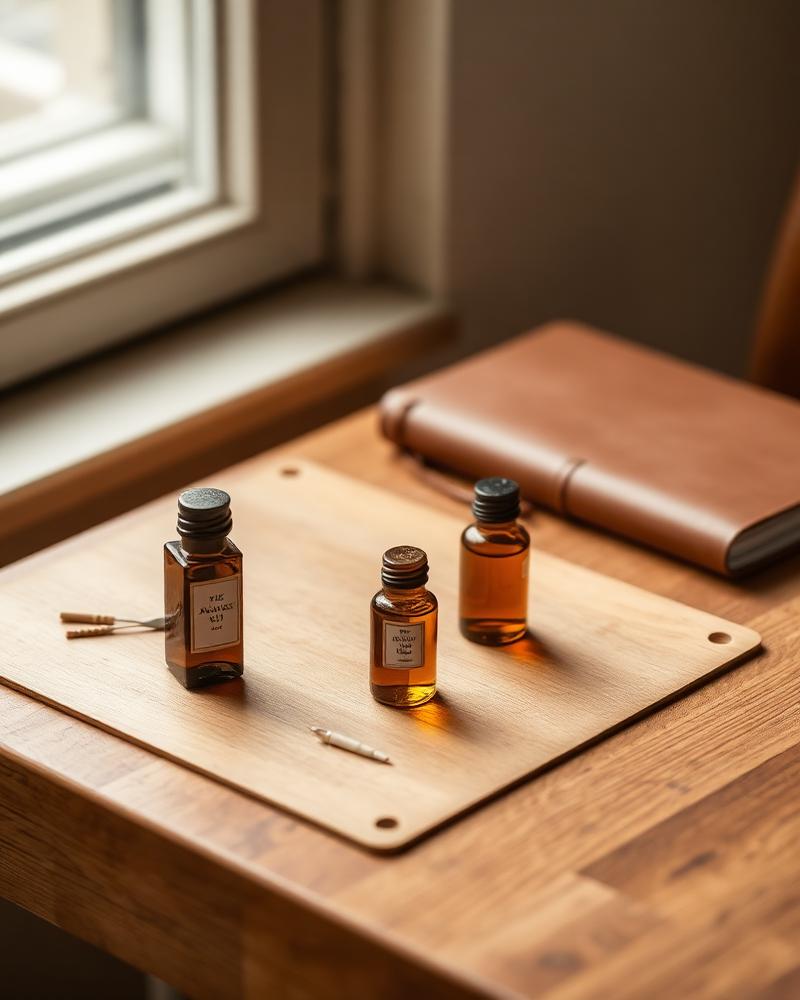
When I run perfume workshops in Mumbai, the first exercise I do is not blending. It is something quieter and slightly uncomfortable. I hand everyone a single unmarked blotter dipped in one oil and ask them to write down, on a small card, three words that describe what they smell. No 'nice'. No 'strong'. No 'expensive'. Three real words.
The room goes silent for about ninety seconds. Then it goes loud. Because most adults — and I include myself fifteen years ago — have never had to put language on what their nose is doing. We are visually fluent and olfactorily mute. Fixing that is the actual beginning of the craft.
There is a simple framework I borrowed from my training in Grasse and adapted for Indian noses. For any oil you smell, try to answer three questions. What family is it — woody, floral, citrus, spicy, herbal, resin, animalic, gourmand? What temperature does it feel — cold, cool, warm, hot? And what memory, if any, does it pull up, even a vague one?
That last question is the unlock. The smell of mitti attar might be 'earthy, warm, monsoon at my nani's house in Lucknow, 2003'. That is a more useful description for blending than any technical note breakdown, because it tells you what emotional register the oil is operating in. Two oils in the same emotional register tend to braid into accords without much fighting.
Keep a small journal. Cheap, plain, the size that fits in a handbag. Every time you try a perfume — yours, a friend's, something at a counter — write three lines. Date, the perfume, three words. Do this for one month and your blending will change before the month is out. I have customers in Bangalore and Delhi who started a journal in January and were sending me genuinely sophisticated blend recipes by April.
When you sit down with a DIY perfume kit, do the blotter ritual first. One oil at a time. One blotter per oil. Smell, breathe out, breathe in, write your three words. Then arrange the blotters by temperature, not by what looks pretty. Cold to warm, left to right.
Now the magic. Pick up two blotters that are next to each other on your temperature line. Hold them together about a centimetre under your nose. Whatever you smell now is a candidate accord. The reason adjacent oils on your temperature line tend to pair is not mystical — perfumes generally feel coherent when the components occupy a narrow emotional band. Wide jumps from cold citrus to hot resin work, but they are advanced moves, not first-blend moves.
The Signature Kit is, by design, an exercise in this kind of focused vocabulary. Fewer oils, each picked because it has a strong, nameable personality. You learn the names faster when there are fewer names to learn.
Vocabulary is not snobbery. It is a tool. The day you can say 'this blend is too cold in the heart' or 'the base is leaning sweet, I need something dry,' you have stopped guessing and started composing. From there, getting to a signature scent that is actually yours is a matter of weeks, not years.
"You cannot blend what you cannot name. Naming is most of the craft."
Beginner Kit ₹1,999
Studio 6 Foundation palette — Bergamot, Grapefruit, Lavender, Rose, Cedarwood, Orange Blossom.
Every kit includes complimentary access to the AI Perfume Studio — personalised recommendations, step-by-step mixing guidance, and a place to save and refine your blends.
How to do it, step by step
- Buy one cheap notebookPlain, handbag-sized. This is your scent journal. Every smell test goes in here in three lines.
- Smell one oil at a timeDip a fresh blotter in one oil. Hold a few centimetres from your nose. Breathe out first, then breathe in slowly.
- Write three real wordsNo 'nice', no 'strong'. Use the family-temperature-memory framework: what family (woody/floral/citrus/spicy), what temperature (cold to hot), what memory it pulls up.
- Arrange by temperatureLay your blotters left-to-right from coldest to warmest. Adjacent oils tend to pair into accords; wide jumps are advanced moves.
- Repeat for a monthOne entry a day. After 30 days your blending decisions will be measurably sharper — language is most of the craft.
Olfactory Psychologist, PhD
Dr. Mehta holds a PhD in sensory psychology and writes about why we wear what we wear — the emotional architecture of personal scent.
Stories like this, once a month
Quiet musings on scent, memory and the rituals of personal blending.
Continue Reading
How to Build an Accord: The Small Pairings That Make a Perfume Feel Whole
An accord is two or three notes that stop sounding like themselves and start sounding like one new thing. A guide to building your first accords at home — and the classic Indian pairings to start from.

Anatomy of a Perfume Note: Top, Heart and Base, Explained
A working guide to the three-act structure of every fragrance — and how to use top, heart and base notes when you blend your own perfume with a DIY kit.
How to Make Your Own Perfume: A Beginner's Guide to Formulation
Demystifying the math behind the top, heart and base notes — a step-by-step guide to using your first DIY perfume kit at home in India.
Build a Perfume Together
Date night, gifting, or a quiet evening alone — every Whiff & When kit is an invitation to make something only you could make.
Shop the Kits