How to Make Your Own Perfume: A Beginner's Guide to Formulation
Demystifying the math behind the top, heart and base notes — a step-by-step guide to using your first DIY perfume kit at home in India.
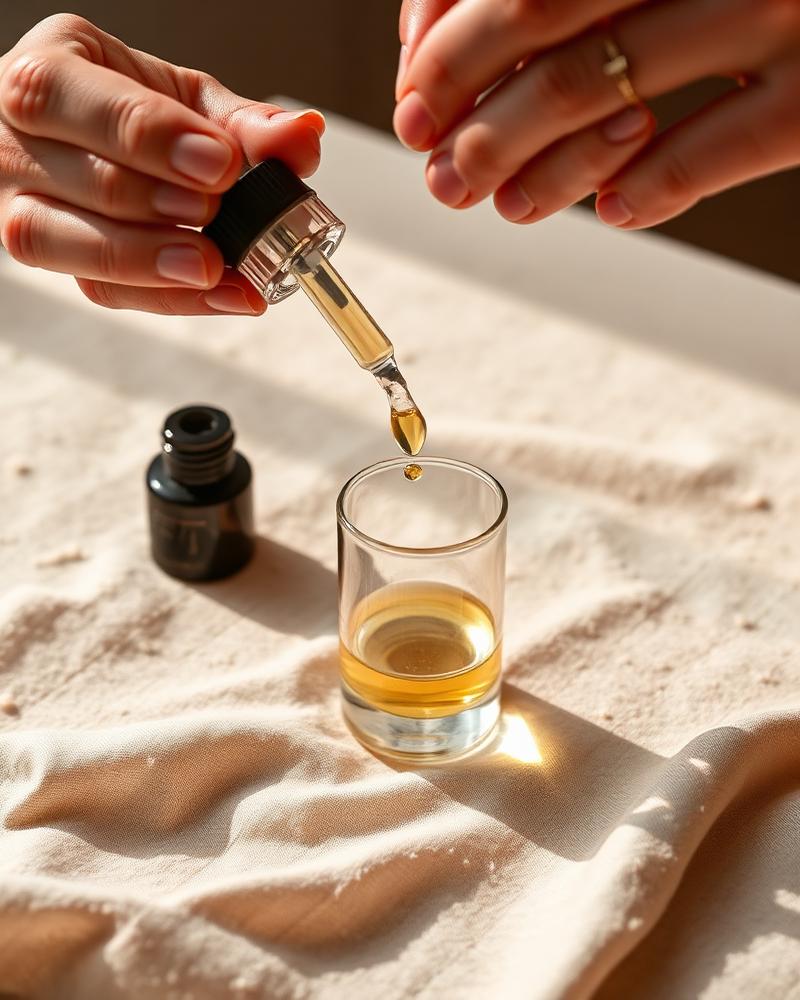
Almost every first-time blender makes the same mistake. They reach for whatever smells loudest in the box. A fragrance, like a sentence, needs unstressed syllables too. The good news is that learning to make your own perfume at home is far more forgiving than learning to cook — you do not need a stove, and nothing burns if you walk away.
Start with three vials, not ten. One top note, one heart, one base. The constraint is the whole lesson. Almost every great early blend I have seen in our Saturday workshops came from someone who chose three ingredients deliberately and refused to add a fourth. Every Whiff & When kit is structured this way on purpose; your Beginner Kit ships as a small palette, not an overwhelming one.
The starting ratio most beginners do well with is 30% top, 50% heart, 20% base. In a 10ml blend that is roughly 3ml of citrus or herbal, 5ml of floral or spice, 2ml of wood or resin, all carried in perfumer's alcohol or jojoba depending on the format you want.
Use a glass beaker, never plastic. Use a fresh pipette for each oil. Do not share droppers between bottles, even once. Cross-contamination at this stage will ruin a blend you cannot later diagnose, which is the most frustrating mistake to make in your first week. Both tools come in the kit so you are not sourcing perfume-grade glass yourself.
Build in drops rather than millilitres on your early attempts. A drop is roughly 0.05ml, so a 30:50:20 blend translates to about 6 drops top, 10 drops heart, 4 drops base. Small batches let you fail cheaply, and you will fail a few times before you do not.
Now the part everyone skips and quietly regrets — let the blend rest. Twenty-four hours minimum, seven days ideally, in a cool, dark place. The molecules need time to find each other. A blend that smells thin on day one will often deepen into something extraordinary by day five. It looks like nothing is happening. Plenty is happening.
Test on skin, not paper, before you decide. Paper does not warm. The same blend on a blotter and on the inside of your forearm can be two genuinely different perfumes.
Keep a notebook. Date, ingredients, exact drop counts, and three words about how it smells at one minute, one hour, and the next morning. The notebook becomes more valuable than the blend itself, because it is the only way the next blend gets better. If handwriting is not your thing, every kit comes with complimentary access to our AI Perfume Studio, where you can save a formula, tweak the ratios and get a suggestion back before you waste oil on it.
Above all, do not try to recreate the bottle on your dresser. Start with what you actually love the smell of in the world — the spice rack on a winter morning, your grandmother's wooden cupboard, the inside of an old book — and build outward from there. That, in the end, is the whole point of making your own.
"Write down everything. The first blend you love will, otherwise, vanish."
Beginner Kit ₹1,999
Studio 6 Foundation palette — Bergamot, Grapefruit, Lavender, Rose, Cedarwood, Orange Blossom.
Every kit includes complimentary access to the AI Perfume Studio — personalised recommendations, step-by-step mixing guidance, and a place to save and refine your blends.
Olfactory Psychologist, PhD
Dr. Mehta holds a PhD in sensory psychology and writes about why we wear what we wear — the emotional architecture of personal scent.
Stories like this, once a month
Quiet musings on scent, memory and the rituals of personal blending.
Continue Reading
How to Make Perfume at Home: A Beginner's Guide for India
A practical, no-nonsense walkthrough for making your first bottle of perfume at home in India — with the ingredients, ratios and small mistakes that actually matter.
The Quiet Math of Dilution: Getting Your Perfume Ratios Right at Home
Most home blends fail not because of the oils, but because of the dilution. A working guide to perfume concentration, carrier ratios and the small numbers that decide whether your scent sings or shouts.
Fixing a Bad Blend: A Field Guide to Rescuing Home-Made Perfume
Muddy, flat, too sharp, no projection, smells like alcohol — every home blender hits at least one of these. A practical troubleshooting guide for saving the bottle instead of binning it.
Build a Perfume Together
Date night, gifting, or a quiet evening alone — every Whiff & When kit is an invitation to make something only you could make.
Shop the Kits