Chasing Night-Blooming Jasmine: A Note on Indian Florals
A pre-dawn journey through the floral markets of Madurai, the truth about Parijat attar, and how to use Indian jasmine as a heart note in a DIY perfume kit.
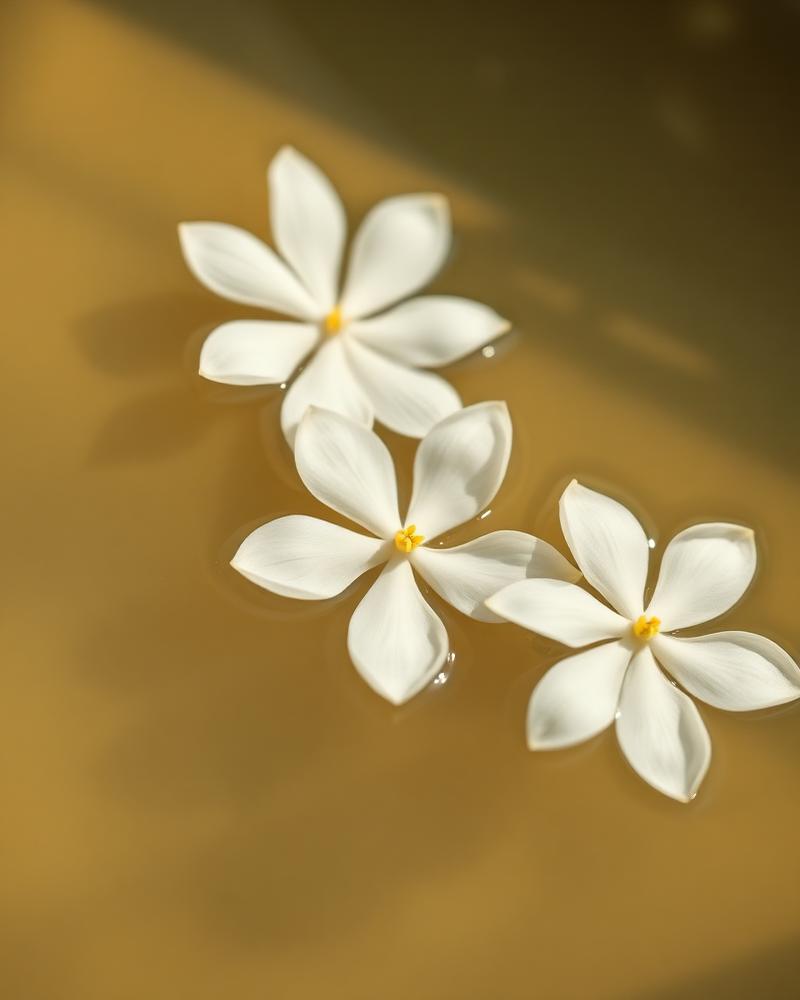
We pulled into the Mattuthavani flower market in Madurai at four in the morning. The trucks had not unloaded yet. The air, even before any of the flowers came out, smelled like damp jute, cardboard tea cups, and the faint metallic edge of the Vaigai river running somewhere behind us.
Parijat. The night-blooming jasmine, Nyctanthes arbor-tristis. It opens after sunset and falls by sunrise. Its Sanskrit name translates roughly as 'sorrow tree', because the flowers shed themselves at dawn as if mourning the night they were given. To catch them you have to arrive before the day knows it is coming.
The pickers are mostly older women, working with practiced hands and small cane baskets. They do not pluck the flowers, they catch them. The blooms fall on their own. Anything still attached to the tree at sunrise is left for the next night and the women just walk back home.
By 5:30 AM the first lots are weighed at the entrance to the market. By 6 they are loaded onto a refrigerated truck heading north toward the distillery. The window from petal to deg is under twelve hours. After that, the volatile top notes — that green, almost milky lift that makes parijat unmistakable — start to flatten, and the attar that comes out the other end is a different perfume altogether.
What you smell when you finally hold the finished attar is not the flower I held in Madurai. The flower itself is sharper, almost grassy, with a small animalic edge that gets softened in the copper. The bottle holds the negotiation between the flower and the heat of the deg, between the petal and the patience of the women who caught it falling.
When Indian jasmine appears in a DIY perfume kit, it asks for restraint. Three to four drops maximum in a 10ml blend. Anchor it under sandalwood. Lift it with a thin slice of bergamot. Anything more and the flower starts to apologise for being there. Pair it inside the Alchemist Kit and you will see exactly why Indian florals do not behave like their European cousins.
This is what scent and memory really are. Never the thing itself. The thing as it survived the journey to you. The blend on my dresser six months later still pulls me back to that market, not because of the flowers, but because of the jute, the tea, the first grey light over the river. Memory loads itself onto whatever carrier it can find.
"What the bottle holds is not the flower. It is the negotiation between the flower and the hour it chose to bloom."
Alchemist Kit ₹2,499
Studio 6 Reserve palette — Sandalwood, Saffron, Orris Root, Woody Amber, Tonka Bean, Leather.
Every kit includes complimentary access to the AI Perfume Studio — personalised recommendations, step-by-step mixing guidance, and a place to save and refine your blends.
Perfumery Researcher
Meher researches traditional Indian attar craft — Kannauj distilleries, mitti attar, oud — and translates it for modern home blenders.
Stories like this, once a month
Quiet musings on scent, memory and the rituals of personal blending.
Continue Reading
Mitti Attar: How India Bottled the Smell of the First Monsoon
Petrichor — that smell of the first rain on dry earth — has been distilled in Kannauj for 400 years. The science, the nostalgia, and how to recreate it in your own blend.
Best Perfume for Women in India: A Modern Guide
Bella Vita, Zara, Chanel, Victoria’s Secret, Skinn — the bestseller list is exhausting. Here’s a smarter framework for choosing (or blending) the perfume that actually feels like you.
The Poetics of Sandalwood: Building an Indian Signature Scent at Home
Mysore sandalwood is the quiet anchor of Indian perfumery — and the easiest base note to start with when you make your own perfume at home with a DIY kit.
Build a Perfume Together
Date night, gifting, or a quiet evening alone — every Whiff & When kit is an invitation to make something only you could make.
Shop the Kits