Natural vs Synthetic Perfume: Which Is Actually Better?
Neither is objectively better. Natural perfume uses only essential oils and absolutes — richer, less consistent, more expensive. Synthetic perfume uses lab-made aroma molecules — more stable, safer for skin, and often more sustainable. Most modern perfumes use both.
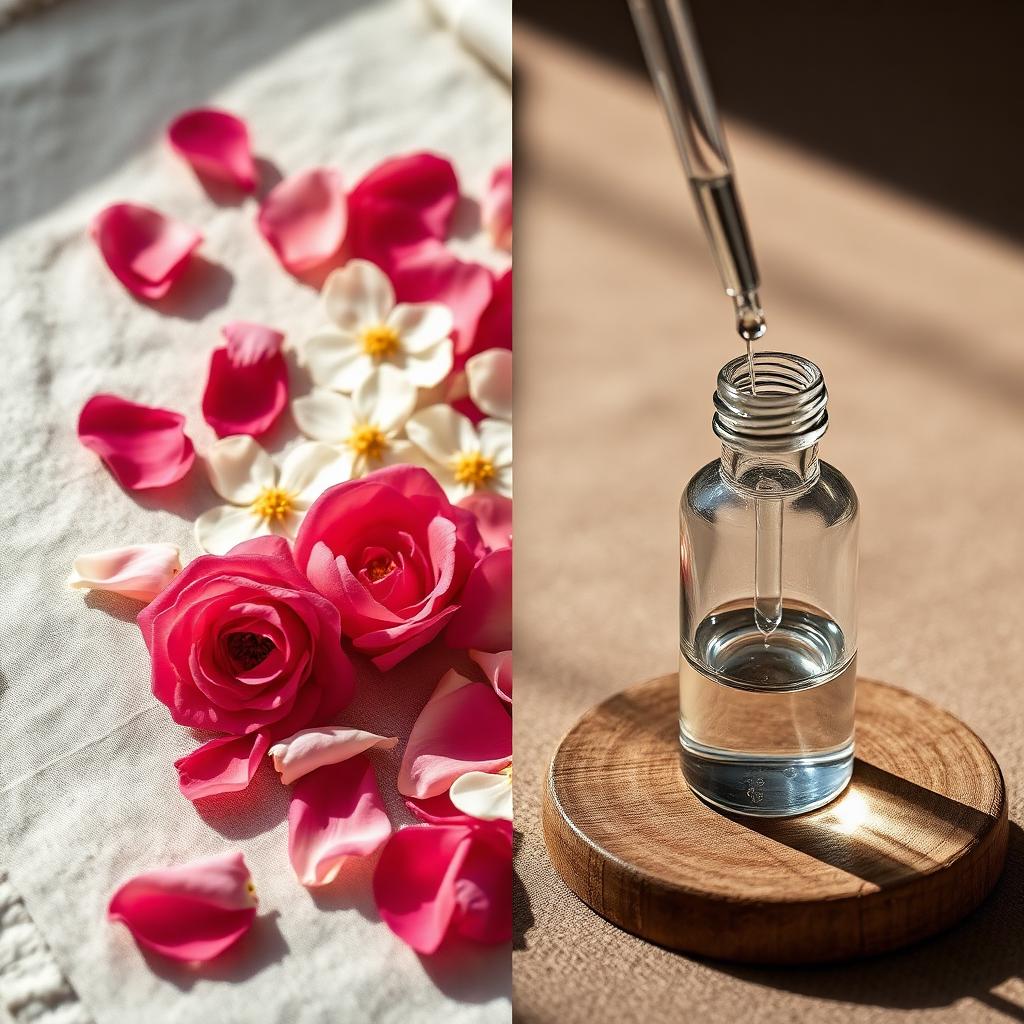
Natural perfume is made only from botanical materials — essential oils, absolutes, CO2 extracts, resins, tinctures. Synthetic perfume uses aroma molecules synthesized in a lab, either recreating a natural molecule or inventing an entirely new one. Almost every commercial perfume you have ever smelled — including the ones marketed as 'luxury natural' — uses a mix of both. Neither category is objectively better. They solve different problems.
Natural materials sound romantic and often are. But they have real limitations. A kilogram of rose otto requires around 4,000 kilograms of rose petals. Jasmine absolute is priced per gram. Sandalwood from Karnataka is now controlled by the state. Naturals also drift — the same rose oil from the same field can vary from year to year, which makes reproducible perfumery genuinely hard.
Synthetics solve three problems at once. Consistency (a molecule of hedione smells identical whether it was made in 1990 or last week). Access (you can smell ambergris without hunting a whale). Safety (many botanical materials are actually more allergenic than their synthetic replacements — bergamot, oakmoss, and cinnamon are regulated for exactly this reason).
The environmental argument cuts both ways. Naturals require enormous land and water. Synthetics require petrochemical feedstock. A responsibly sourced synthetic musk has a smaller footprint than a poorly sourced natural sandalwood. A well-managed rose field in Kannauj has a smaller footprint than a badly regulated lab. There is no clean answer here, only clean sourcing on a case-by-case basis.
Where naturals genuinely win: complexity and warmth. A single natural rose oil contains hundreds of molecules, most of them present in trace amounts. That richness is very hard to fake. A pure rose absolute on skin has a depth that even the best synthetic reconstruction lacks.
Where synthetics genuinely win: novelty, projection, longevity. Modern perfumery would be impossible without them. Iso E Super, ambroxan, hedione, calone — these molecules do not exist in nature, and most of the perfumes you love probably contain at least one of them.
For a home blender in India, the honest recommendation is this: start with a warm natural core and let synthetics enter your palette only when you know exactly what problem you are trying to solve with them. That is how most niche perfumers build their libraries too. The Alchemist Kit is the one I'd hand a purist — Sandalwood, Saffron, Orris Root, Tonka Bean, Leather and Woody Amber, six materials with enough depth that you stop missing the synthetic shortcuts.
The rose you smell in a natural perfume and the rose you smell in a synthetic one are both, in different ways, real. Learn to enjoy each for what it is, and stop treating the label 'natural' as a moral position.
"The rose you smell in a natural perfume and the rose you smell in a synthetic one are both, in different ways, real."
Alchemist Kit ₹2,499
Studio 6 Reserve palette — Sandalwood, Saffron, Orris Root, Woody Amber, Tonka Bean, Leather.
Every kit includes complimentary access to the AI Perfume Studio — personalised recommendations, step-by-step mixing guidance, and a place to save and refine your blends.
Frequently asked
- Are natural perfumes safer than synthetic?
- Not always. Many natural materials — bergamot, cinnamon, oakmoss — are actually more allergenic than their synthetic replacements and are strictly regulated in modern perfumery. 'Natural' does not automatically mean 'skin-safe'.
- Do natural perfumes last longer?
- Usually less long. Most natural materials evaporate faster than well-designed synthetics. A natural perfume typically lasts 3–5 hours; a mixed formula with quality synthetic base notes can last 8–12 hours.
- Are essential oils the same as perfume?
- No. Essential oils are raw materials used in perfumery, but a perfume is a formulated blend of many materials — sometimes 40 or more — balanced across top, heart and base. A single essential oil is closer to an ingredient than a finished dish.
- Is synthetic perfume bad for skin?
- Regulated synthetic materials used at industry-approved concentrations are generally well-tolerated. Most skin reactions to perfume are caused by specific molecules — natural or synthetic — that a person is individually allergic to, not by 'synthetics' as a category.
Independent Perfumer
Vikram is a Mumbai-based independent perfumer with a decade of bench work behind him. He writes the blunt, troubleshooting-heavy guides.
Stories like this, once a month
Quiet musings on scent, memory and the rituals of personal blending.
Continue Reading
How Perfume Is Made: From Raw Botanical to Bottle, Explained
Perfume is made in four broad stages — sourcing raw materials, extracting their aromatic oils, blending those oils into a formula around top, heart and base notes, then diluting and maturing the blend in alcohol or oil. Here's what actually happens at each stage.
Kannauj: The Tiny UP Town That Quietly Bottles Indian Summer
Kannauj has been distilling attar for over 400 years — and is the only place on earth still making *mitti attar*, the smell of the first monsoon rain. A field-note from India’s perfume capital.
What Is Attar? A Plain-English Guide to India's Oldest Perfume
Attar is a concentrated, alcohol-free perfume oil traditionally distilled in India from flowers, wood, spices or clay onto a sandalwood base. Here's how it differs from modern perfume — and how to actually wear it.
Build a Perfume Together
Date night, gifting, or a quiet evening alone — every Whiff & When kit is an invitation to make something only you could make.
Shop the Kits